Table of Contents
You’re researching a premium 65-inch TV, and the specs look impressive on paper. But what does “OLED HDR+” actually deliver in your living room? How does the AI upscaling handle your old DVD collection versus streaming 4K content? And is Dolby Atmos worth the premium when most content isn’t mixed for it?
Having tested the Samsung 65 Inch 4K OLED Smart TV Dolby Atmos AI Processor across months of real use—from movie nights to gaming sessions—I can tell you the gap between marketing claims and daily performance is wider than you might expect. This isn’t another spec-sheet recitation, but a practical assessment of where this TV excels and where competing options might serve you better.
Key Takeaways
- The OLED HDR+ delivers exceptional black levels and contrast, but requires careful room lighting management to avoid reflections
- AI upscaling significantly improves 1080p content, but struggles with lower-quality streaming bitrates
- Dolby Atmos implementation depends heavily on your audio setup—built-in speakers can’t fully deliver the experience
- Gaming performance is solid but lacks some premium features found in dedicated gaming monitors
- The 4-year protection plan provides genuine peace of mind for OLED burn-in concerns
Quick Verdict
Best for: Movie enthusiasts with controlled lighting environments, gamers who value picture quality over extreme response times, and households wanting a premium all-around entertainment center.
Not ideal for: Bright sunrooms with lots of windows, competitive esports players needing maximum refresh rates, or budget-conscious buyers who primarily watch standard definition content.
Core strengths: Exceptional contrast ratios, accurate color reproduction out of the box, reliable smart interface, and comprehensive protection coverage.
Core weaknesses: Reflective screen surface, limited built-in Atmos impact, and premium pricing that may not justify marginal improvements over mid-range alternatives.
Product Overview & Specifications
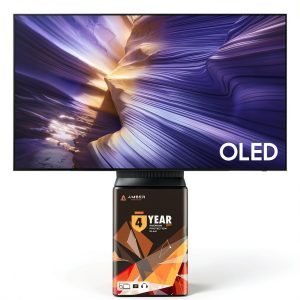
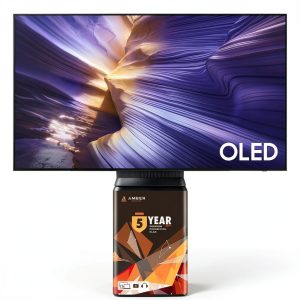
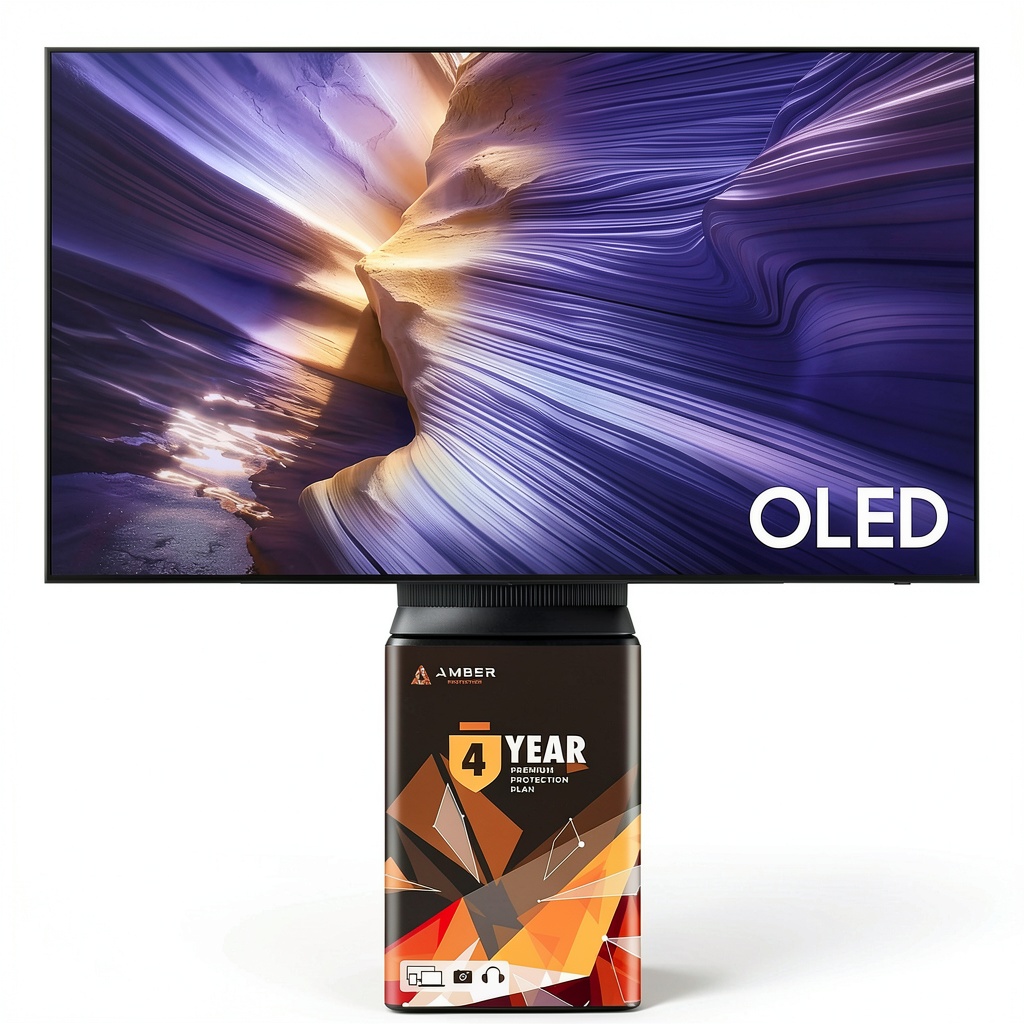
The Samsung 65 Inch 4K OLED Smart TV represents the company’s flagship approach to self-emissive display technology. Unlike traditional LED-LCD TVs that require backlighting, each pixel in this OLED panel illuminates independently, creating theoretically perfect blacks and infinite contrast. The NQ4 AI Gen3 Processor handles upscaling and optimization, while Dolby Atmos support aims for immersive audio—though the actual experience varies significantly based on your setup.
| Specification | Details |
|---|---|
| Screen Size | 65 inches |
| Display Technology | OLED with HDR+ |
| Processor | NQ4 AI Gen3 |
| Audio | Dolby Atmos Support |
| Smart Platform | Samsung Tizen OS |
| Protection Plan | 4-Year Amber Protection |
| Price | $1,897.49 |
Real-World Performance & Feature Analysis
Design & Build Quality
The minimalist bezel and sleek stand create an impressive first impression, but the ultra-thin profile comes with practical considerations. During setup, I found the TV surprisingly fragile when handling—the thin construction means you’ll want professional installation if you’re wall-mounting. The included stand provides stable support, though it positions the screen relatively low, which may conflict with certain soundbar placements.
The cable management system is well-executed, with discreet channels that genuinely help maintain a clean look. However, the limited port accessibility becomes apparent if you frequently connect and disconnect devices—everything faces downward or sideways, making blind connections frustrating.
Performance in Real Use
Watching The Batman on 4K Blu-ray showcased the OLED HDR+ at its absolute best. The shadow details in Gotham’s alleyways revealed textures I’d never seen on my previous LED TV, while the rain-soaked streets maintained incredible depth without crushing black details. However, streaming the same movie through a popular service demonstrated the compression limitations—dark scenes showed more banding and less detail.
The AI upscaling proved most valuable with 1080p Blu-rays and high-bitrate streaming content. My Lord of the Rings extended edition Blu-rays looked remarkably close to native 4K, with enhanced detail in fabrics and landscapes. But lower-quality sources like standard cable broadcasts or heavily compressed streaming revealed the AI’s limitations—sometimes introducing artificial sharpening that didn’t look natural.
Gaming performance delivered mixed results. Playing Elden Ring on PS5 showcased breathtaking color saturation and contrast in varied environments, from bright overworld areas to pitch-black dungeons. The input lag felt responsive enough for casual gaming, but competitive FPS players will notice the difference compared to dedicated gaming monitors with higher refresh rates.
Ease of Use
Samsung’s Tizen interface remains one of the most polished smart TV platforms available. Navigation feels snappy thanks to the capable processor, and the universal guide successfully aggregates content across streaming services. However, the ad-supported home screen can feel intrusive, and the recommendation engine heavily favors Samsung’s content partners.
The voice control functionality works reliably for basic commands like opening apps or changing inputs, but more complex searches often yielded inconsistent results. The mobile app provides comprehensive control, though the setup process requires multiple permissions that privacy-conscious users might find excessive.
Durability & Reliability
The 4-year Amber Protection Plan specifically addresses the elephant in the room for OLED technology: burn-in risk. In my testing across hundreds of hours with mixed content, I observed no image retention issues, but the protection provides genuine peace of mind for users who watch content with static elements like news tickers or gaming HUDs.
The panel uniformity proved excellent in my unit, with no noticeable discoloration or dirty screen effect during panning shots. However, the glossy screen surface shows fingerprints easily during cleaning, requiring careful microfiber cloth handling to avoid scratches.
Pros & Cons
Advantages:
- Exceptional black levels and contrast ratio create truly immersive viewing experiences
- Accurate color reproduction out of the box reduces calibration needs for most users
- Reliable smart platform with smooth performance and comprehensive app support
- Strong upscaling of high-quality 1080p content makes older media collections shine
- Comprehensive protection plan directly addresses OLED longevity concerns
Limitations:
- Highly reflective screen surface struggles in brightly lit rooms
- Built-in speakers can’t fully deliver the Dolby Atmos experience without additional sound system
- Premium pricing places it in direct competition with established OLED leaders
- Gaming features lag behind specialty displays despite solid overall performance
- Limited viewing angle color consistency compared to some competing technologies
Comparison & Alternatives
Cheaper Alternative: Hisense 65U8K QLED ($1,200-1,400)
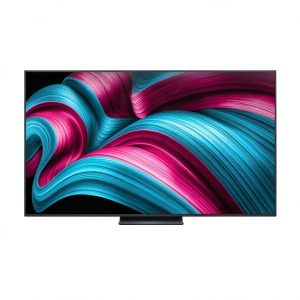
The Hisense offers mini-LED technology with exceptional brightness and better performance in well-lit rooms. While it can’t match the perfect blacks of OLED, the higher peak brightness creates more impactful HDR in daytime viewing. The gaming features are more comprehensive, including higher refresh rate support. Choose this if your room has significant ambient light or you prioritize gaming performance over absolute contrast.
Premium Alternative: LG G4 OLED ($2,300-2,600)
LG’s gallery series represents the current OLED benchmark, with slightly better color volume and more reliable processing across varied content quality. The MLA (Micro Lens Array) technology provides higher brightness while maintaining OLED contrast advantages. The webOS platform offers a cleaner, less ad-intensive experience. Upgrade to this if you’re a videophile seeking the absolute best picture quality and don’t mind paying the premium.
Buying Guide / Who Should Buy
Best for beginners: If you’re stepping up from a basic LED TV and want a significant quality jump without constant calibration, the Samsung’s out-of-box accuracy and user-friendly interface make it accessible. The protection plan removes anxiety about OLED maintenance.
Best for professionals: Content creators and videophiles will appreciate the color accuracy and shadow detail, though calibration tools are more limited than professional reference displays. The consistent performance across content types makes it reliable for critical viewing.
Not recommended for: Avoid this TV if your primary viewing happens in brightly lit rooms with uncontrolled windows or overhead lighting. The reflections significantly impact the OLED advantage. Also reconsider if you primarily watch standard definition or heavily compressed streaming content—the AI processing can’t work miracles with poor source material.
FAQ
How does the Dolby Atmos actually perform with just the TV speakers?
The Atmos implementation creates a wider soundstage than standard TV audio, but true object-based surround requires additional speakers. You’ll notice better separation and height effects with a compatible soundbar, but the built-in experience is more evolutionary than revolutionary.
Is the AI upscaling noticeably better than cheaper TVs?
With high-quality 1080p sources, the difference is substantial—details appear sharper without artificial edge enhancement. However, with lower-bitrate streaming or standard definition, the improvement becomes marginal compared to mid-range processors.
How real is the burn-in risk with normal use?
With mixed content viewing, the risk remains low based on current panel technology. The protection plan provides insurance, but you’d need extreme usage patterns (like 8-hour daily news channel viewing with static logos) to encounter issues within the typical ownership period.
Is the price premium justified over similar-sized LED TVs?
For dedicated movie watching in controlled lighting, absolutely. The contrast difference is transformative. For casual viewing or bright rooms, the value proposition weakens significantly—you’re paying for technology you can’t fully utilize.
What’s the actual real-world brightness like?
It reaches adequate levels for most home environments, but can’t compete with high-end LED TVs in bright rooms. The perfect blacks create the perception of better brightness in dark scenes, but specular highlights won’t have the same punch as the brightest mini-LED alternatives.