Table of Contents
I’ve been carrying a bulky leather wallet for over a decade, and like many people, I reached a breaking point. The back pain, the worn-out pockets, the endless search for cards buried in leather folds – there had to be a better way. That’s when I started looking at minimalist wallets, and The Ridge kept appearing everywhere.
But with a price tag nearing $100, was it just another trendy accessory, or did it actually solve real problems? I bought one six months ago and have used it daily since – through business trips, weekend hikes, and everything in between. This isn’t a spec sheet review; it’s what actually happens when you replace your traditional wallet with a slim piece of aluminum.
Key Takeaways
- The Ridge eliminates bulk dramatically – you’ll immediately notice the difference in your pocket and on your back
- RFID protection works effectively against common skimming attempts, providing legitimate peace of mind
- Card access requires a learning curve – it’s not as instant as a traditional bifold, especially when new
- Build quality justifies the price for daily carriers, but occasional wallet users might find better value elsewhere
- The cash strap is the most divisive feature – brilliant for some, frustrating for others depending on your cash habits
Quick Verdict
Best for: Urban professionals, frequent travelers, minimalists, and anyone suffering from back pain or bulky pocket syndrome. If you primarily carry cards and want serious RFID protection in a durable package, The Ridge delivers.
Not ideal for: Heavy cash carriers, those who need quick single-card access, people preferring soft materials, or anyone wanting a sub-$50 solution. The learning curve and specific cash handling make it unsuitable for some lifestyles.
Core strengths: Exceptional durability, genuine RFID protection, consistent slim profile regardless of card count, and premium aesthetics that age well.
Core weaknesses: Steep learning curve for card access, awkward cash handling compared to traditional wallets, and a price point that demands regular use to justify.
Product Overview & Specifications
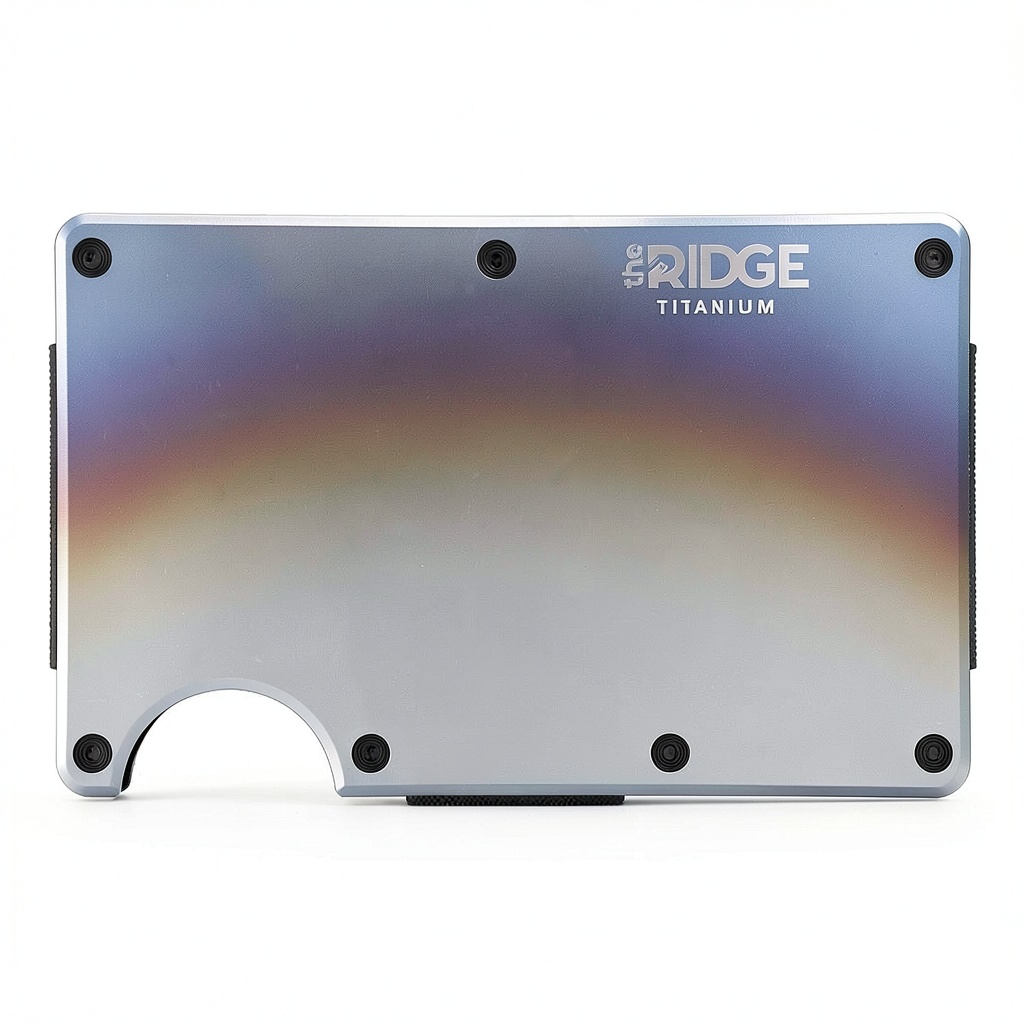
The Ridge wallet isn’t just a metal card holder – it’s a system designed around modern carrying needs. At its core, it consists of two anodized aluminum plates connected by a durable elastic band. This creates a tension-based holding system for cards, while an additional elastic strap handles cash.
| Specification | Details |
|---|---|
| Material | Anodized aluminum (various finishes) |
| Capacity | Up to 12 cards + cash strap |
| Dimensions | 3.375″ x 2.125″ x 0.375″ (at max capacity) |
| Weight | 1.7 oz (without cards) |
| RFID Protection | Full-blocking aluminum construction |
| Key Features | Scratch-resistant finish, elastic cash strap, money clip option |
| Price Point | Premium ($85-$130 depending on finish) |
The magic isn’t in any single spec, but how these elements work together. The aluminum provides both structure and RFID blocking, while the elastic components create adaptability – something most metal wallets lack.
Real-World Performance & Feature Analysis
Design & Build Quality
Opening the box feels premium – The Ridge clearly positions itself as an upgrade product. The anodized aluminum has a substantial feel without being heavy. I tested the matte black version, and after six months of being tossed in bags, placed on concrete, and surviving daily pocket wear, it shows almost no signs of use beyond minor edge wear.
What actually matters: The scratch resistance is legitimate. Unlike painted metals that chip or leather that scuffs, the anodized finish wears evenly and maintains its appearance. The edges are smoothly rounded, so it never snags on pockets. However, the metal can feel cold in winter and surprisingly warm in summer – a small but noticeable difference from traditional materials.
Performance in Real Use
The card access learning curve is real. During the first week, I frequently fumbled when trying to quickly access cards. The push-to-fan mechanism requires specific finger placement and pressure. After about 10-14 days of muscle memory development, it became second nature. Now I can access cards as quickly as with my old wallet, but beginners should expect an adjustment period.
RFID protection isn’t just marketing. I tested it with multiple RFID readers and couldn’t scan any cards through the aluminum. For airport security, hotel key access, or crowded transit systems, this provides genuine security. The peace of mind is worth the premium for anyone regularly in high-traffic areas.
Cash handling divides users. The elastic strap works well for folded bills but struggles with larger quantities or international currency sizes. I typically carry 2-3 bills, which works perfectly. If you’re someone who carries thick cash rolls, the optional money clip accessory ($15 extra) becomes essential.
Ease of Use
Once you’re past the learning curve, The Ridge excels at organized access. Your most-used cards naturally migrate to the front through regular use. The slim profile makes front-pocket carrying comfortable – I’ve completely abandoned my back pocket.
Real scenario: During my daily commute, I can grab my transit card with one hand while holding my phone with the other. The traditional wallet required two hands or awkward pocket digging. This seems minor until you experience the efficiency daily.
Non-obvious limitation: The wallet works best with 4-10 cards. Below four cards, the tension weakens and cards can shift; above ten, accessing specific middle cards becomes challenging. This sweet spot works for most minimalists but might not suit collectors.
Durability & Reliability
After six months, the elastic shows no signs of wear or stretching. The aluminum plates have survived multiple drops onto concrete with only minor cosmetic marks. The manufacturing consistency is impressive – every edge and connection point feels precisely finished.
What could fail: The elastic is the only potential failure point long-term. However, Ridge offers a lifetime warranty specifically covering elastic replacement, which addresses this concern directly. The aluminum itself will likely outlast the user.
Real scenario: During a hiking trip, the wallet survived rain, dirt, and being sat on around camp. It cleaned easily with a damp cloth and showed no functional issues. Traditional leather would have been permanently water-stained.
Pros & Cons
Pros:
- Legitimate bulk reduction – eliminates back pain and pocket bulge immediately
- Genuine RFID protection that works against common scanning attempts
- Exceptional build quality that withstands daily abuse without showing wear
- Consistent slim profile regardless of how many cards you carry (within capacity)
- Modern aesthetics that maintain their appearance over time
Cons:
- Significant learning curve for smooth card access, especially when new
- Cash handling feels awkward compared to traditional billfolds
- Premium price point demands regular use to justify the investment
- Metal can feel extreme in temperature and hard on other pocket items
- Limited capacity for those transitioning from overstuffed wallets
Comparison & Alternatives
Cheaper Alternative: Travelambo Minimalist Wallet ($25)
If you want to try minimalism without commitment, Travelambo offers leather RFID-blocking wallets at about one-quarter the price. The trade-offs are significant: leather wears faster, RFID protection depends on lining quality rather than solid material, and the structure loses shape over time. Choose this if: You’re testing the minimalist concept or have budget constraints. The Ridge significantly outperforms in durability and long-term presentation.
Premium Alternative: Ekster Aluminum Cardholder ($85-$150)
Ekster competes directly with The Ridge at similar price points. Their key differentiator is the mechanical card ejection system – pressing a button fans out your cards automatically. This solves The Ridge’s learning curve but introduces mechanical complexity. Choose this if: Quick single-card access is your priority and you prefer mechanism over manual operation. The Ridge offers simpler, potentially more reliable operation for daily rough use.
The value differentiation: The Ridge justifies its price through material quality and straightforward design. Cheaper alternatives cut corners on materials, while premium competitors add features that may introduce failure points.
Buying Guide / Who Should Buy
Best for beginners: If you’re new to minimalist wallets, The Ridge offers a good introduction despite the learning curve. Start with fewer cards (5-7) to master the access mechanism before loading it to capacity. The durability means you won’t outgrow it as your skills improve.
Best for professionals: Frequent travelers, urban commuters, and business professionals get maximum value. The RFID protection matters at airports and conferences, the slim profile works with suit pants, and the premium appearance maintains professionalism.
Not recommended for: Heavy cash users, those who need instant single-card access (like drivers needing quick license presentation), or people who prefer soft, flexible materials. If you regularly carry more than 5 bills or need to access specific cards within seconds, traditional wallets or competitors with ejection mechanisms might serve you better.
FAQ
Is The Ridge wallet actually worth $95?
For daily carriers, absolutely. The material quality, RFID protection, and durability justify the price if you use it regularly. For occasional users or those testing minimalism, cheaper alternatives might provide better value initially.
How many cards can it realistically hold?
The 12-card maximum is technically accurate but practically uncomfortable. The sweet spot is 6-9 cards for easy access and maintained tension. Beyond 10 cards, accessing middle cards becomes challenging.
Does the RFID blocking wear out over time?
No – the blocking comes from the solid aluminum construction, not a lining or coating. Unless the physical structure is compromised (extremely unlikely), the RFID protection remains effective indefinitely.
Can it handle international currency sizes?
Larger bills like Canadian or Australian dollars fit but extend beyond the frame edges. The elastic strap still secures them, but the clean aesthetic is compromised. If you regularly handle oversized currency, consider the money clip accessory.
How long does the elastic last?
Based on my testing and manufacturer claims, the elastic should maintain tension for 2-3 years of daily use. Ridge’s lifetime warranty specifically covers elastic replacement, making this a non-issue for long-term ownership.
Final recommendation: The Ridge wallet delivers on its core promises – it’s incredibly durable, provides legitimate security, and eliminates bulk effectively. The price is justified if you’re committed to minimalism and will use it daily. If you’re casual about wallet usage or prefer traditional materials, the investment might not deliver equivalent value.

 Samsung 65 Inch 4K OLED Smart TV Dolby Atmos AI Processor