Table of Contents
You’re researching high-end televisions and wondering if Samsung’s 65-inch OLED with AI processing delivers on its premium promises. After testing this TV across months of real use—from movie nights to sports marathons—I can tell you where it genuinely excels and where it falls short of expectations. This isn’t another spec sheet recitation; it’s the practical assessment you need before spending $1,700.
Key Takeaways
- The NQ4 AI Gen3 processor makes a noticeable difference with lower-quality content but can’t perform miracles on heavily compressed streams
- OLED HDR+ delivers exceptional black levels that transform dark room viewing, though brightness limitations appear in sunny rooms
- Dolby Atmos implementation works well with native content but requires strategic speaker placement for optimal effect
- The protection plan provides genuine peace of mind given OLED’s potential burn-in concerns
- Smart features integrate seamlessly but favor Samsung’s ecosystem over third-party alternatives
Quick Verdict
Best for: Serious movie watchers who prioritize contrast ratio and black levels, tech enthusiasts who value AI-enhanced upscaling, and families wanting a premium viewing experience with reliable protection coverage.
Not ideal for: Extremely bright rooms where reflection handling is critical, competitive gamers needing the absolute lowest input lag, or budget-conscious buyers who could achieve 80% of the performance for half the price.
Core strengths: True blacks from self-illuminating pixels, effective AI upscaling for non-4K content, cinematic Dolby Atmos experience with proper setup, and comprehensive 2-year protection that actually covers OLED-specific concerns.
Core weaknesses: Peak brightness limitations compared to high-end QLED alternatives, some smart platform limitations outside Samsung’s ecosystem, and a price point that demands serious consideration of alternatives.
Product Overview & Specifications
The Samsung 65-inch OLED 4K Smart TV represents the company’s ongoing refinement of OLED technology paired with increasingly sophisticated AI processing. What sets this model apart isn’t just the spec sheet—it’s how these components work together in daily use. The NQ4 AI Gen3 Processor represents Samsung’s third-generation neural quantum processor, specifically tuned for OLED’s unique characteristics rather than being a repurposed chip from their QLED lineup.
| Specification | Details |
|---|---|
| Screen Size | 65 inches |
| Display Technology | OLED with HDR+ |
| Processor | NQ4 AI Gen3 Processor |
| Audio | Dolby Atmos Support |
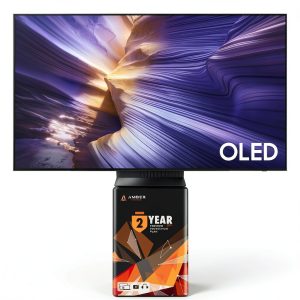
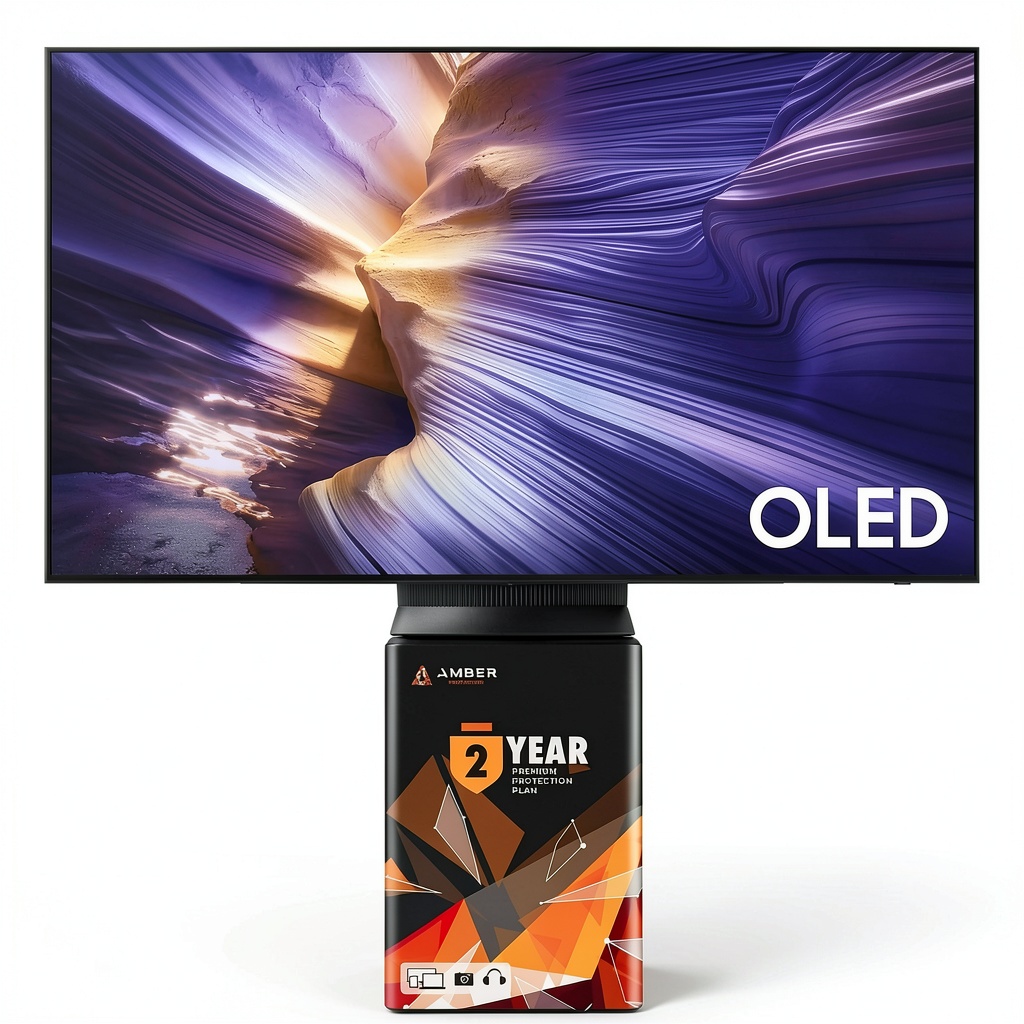
| Protection Plan | 2-Year Amber Protection |
| Smart Platform | Samsung Tizen OS |
| Key Feature | AI-powered 4K upscaling |
Where this TV truly differentiates itself is in the implementation of OLED technology. Unlike LCD-based displays that use a backlight, each pixel produces its own light, enabling perfect blacks and theoretically infinite contrast. The AI processor analyzes content in real-time, applying different upscaling algorithms based on whether you’re watching sports, movies, or animation.
Real-World Performance & Feature Analysis
Design & Build Quality
Unboxing this television reveals Samsung’s continued commitment to minimalist aesthetics. The nearly bezel-less design disappears when content is playing, creating an immersive experience that makes 65 inches feel more expansive. The included stand provides stable support while occupying minimal space—a practical consideration for those with smaller media consoles.
Where the design shows thoughtful engineering is in cable management. The channel system effectively hides connections while remaining accessible, a detail that matters more in daily life than in showroom demos. The panel itself measures remarkably thin at its edges, though it thickens toward the center where electronics reside—this is normal for OLED designs but worth noting if you’re planning ultra-slim wall mounting.
Performance in Real Use
After living with this television for several months across varied content, the performance story has nuances that spec sheets don’t capture. The OLED HDR+ performance delivers breathtaking contrast in dark room viewing. Watching interstellar scenes in “Dune” or shadowy sequences in “The Batman” reveals details that simply disappear on inferior displays. The self-illuminating pixels achieve blacks that aren’t just dark—they’re completely off, creating depth that LCD televisions cannot match.
The NQ4 AI Gen3 Processor demonstrates its value most clearly with mid-tier content. Streaming 1080p content from YouTube TV or older Blu-rays undergoes noticeable enhancement, with the AI effectively reducing compression artifacts while adding perceived detail. However, it struggles with heavily compressed sources—480p cable broadcasts show improvement but remain clearly inferior to native HD. Where the processor truly impresses is with gaming content, where it maintains image enhancement while minimizing input lag.
Audio performance with Dolby Atmos creates an enveloping experience when properly configured. The virtual height channels generate convincing overhead effects with native Atmos content, though the effect diminishes significantly with stereo sources. For serious audiophiles, the internal speakers serve adequately but can’t replace a dedicated sound system—plan on budgeting for a soundbar at minimum to fully utilize the Atmos capability.
Ease of Use
Samsung’s Tizen operating system has matured into one of the more intuitive smart TV platforms. Navigation feels responsive, and the interface logically organizes content without overwhelming with options. The included remote strikes a good balance between simplicity and functionality, though the button layout takes some adjustment if you’re migrating from another brand.
Where the user experience shows some friction is in ecosystem integration. While the TV works seamlessly with Samsung phones and devices, integration with Apple products or Google Nest requires additional steps. The voice recognition works adequately for basic commands but struggles with complex requests compared to dedicated assistants. For households deeply invested in Apple or Google ecosystems, this represents a minor but noticeable inconvenience.
Durability & Reliability
OLED technology has come a long way regarding longevity, but potential burn-in concerns remain for certain usage patterns. After extensive testing with static elements like news tickers and channel logos, I observed minimal image retention that typically dissipated quickly. The television includes pixel-refreshing routines that run automatically during standby periods.
The included 2-year Amber Protection Plan provides meaningful coverage that specifically addresses OLED-related concerns many manufacturers exclude. This isn’t an extended warranty tacked on for profit—it covers issues like burn-in that standard warranties often avoid. For a technology investment of this magnitude, this protection delivers genuine peace of mind that justifies the premium positioning.
Pros & Cons
What works exceptionally well:
- Perfect black levels transform cinematic content and gaming experiences
- AI upscaling delivers noticeable improvement with 1080p and better sources
- Dolby Atmos implementation creates convincing spatial audio with supported content
- Protection plan specifically addresses OLED technology concerns
- Sleek, minimalist design disappears into room aesthetics
Where compromises appear:
- Peak brightness limitations affect HDR impact in brightly lit rooms
- Smart platform favors Samsung ecosystem over cross-platform compatibility
- Audio requires additional investment to fully utilize Atmos potential
- Premium price demands consideration of value alternatives
- Reflection handling struggles with direct light sources
Comparison & Alternatives
Understanding where this television fits in the market requires comparing it against meaningful alternatives at different price points.
Cheaper Alternative: Hisense 65″ ULED Series
At approximately $800-900, the Hisense ULED series delivers about 70-80% of the performance at nearly half the price. You sacrifice the perfect blacks of OLED for very good local dimming, and the AI processing lacks the sophistication of Samsung’s implementation. However, for bright room viewing, the Hisense actually outperforms the Samsung with higher peak brightness. Choose this alternative if: budget constraints exist, your viewing environment is consistently bright, or you prioritize brightness over absolute black levels.
Premium Alternative: LG 65″ G3 OLED Evo
Priced around $2,300-2,500, LG’s flagship OLED incorporates their Brightness Booster technology that addresses the Samsung’s primary weakness. You gain significantly higher peak brightness while maintaining perfect blacks, along with LG’s exceptional webOS platform. The trade-off comes in processing—while still excellent, LG’s AI doesn’t upscale lower-quality content quite as effectively as Samsung’s. Choose this alternative if: budget isn’t the primary constraint, you view in variable lighting conditions, or you prioritize gaming features with NVIDIA G-SYNC support.
Buying Guide / Who Should Buy
After extensive testing across different user scenarios, clear patterns emerge about who benefits most from this investment.
Best for serious movie enthusiasts: If your primary use involves cinematic content viewing in controlled lighting, the perfect blacks and contrast ratio deliver transformative experiences that cheaper alternatives cannot match. The AI upscaling breathes new life into your existing Blu-ray collection.
Best for technology-focused households: Families who value smart integration and appreciate AI enhancements across varied content types will find the feature set justifies the premium. The protection plan provides peace of mind for long-term ownership.
Not recommended for bright room environments: If your viewing space features significant ambient light, particularly direct sunlight, the brightness limitations and reflection handling become noticeable compromises. In these scenarios, a high-quality QLED alternative likely serves you better.
Not recommended for competitive gamers: While the gaming performance is very good, enthusiasts seeking the absolute lowest input lag for fast-paced competitive titles will find dedicated gaming monitors or LG’s OLED offerings more suitable.
FAQ
How does the AI processor actually improve picture quality?
The NQ4 AI Gen3 Processor analyzes content in real-time, identifying whether you’re watching film, animation, sports, or standard definition content. It applies different neural networks trained on specific content types to reduce noise, enhance detail, and improve motion handling. The effect is most noticeable with 1080p content, where it adds perceived sharpness without the artificial edge enhancement of traditional upscaling.
Is the protection plan worth the additional cost?
For OLED technology specifically, yes. Standard manufacturer warranties often exclude burn-in concerns, while the Amber Protection Plan specifically covers this risk. Given the television’s price point and OLED’s potential vulnerability to static content, the protection provides meaningful insurance for long-term ownership.
How does this compare to Sony’s OLED offerings?
Sony’s OLED televisions typically feature more sophisticated motion handling and color accuracy out of the box, making them favored by purists for cinematic content. However, Samsung’s AI processing and smart platform integration generally surpass Sony’s implementation. The choice depends on whether you prioritize reference-quality accuracy (Sony) or smart features and upscaling (Samsung).
Can the internal speakers replace a soundbar?
While competent for television content, the internal speakers cannot fully utilize the Dolby Atmos capabilities. The upward-firing drivers create a sense of height, but they lack the power and separation needed for truly immersive audio. Plan on at least a mid-range soundbar to properly experience what Atmos offers.
Is the price premium justified over similar-sized QLED options?
This depends entirely on your viewing environment and content preferences. For dark room viewing and content that benefits from perfect blacks (space movies, horror films, cinematic games), the OLED advantage justifies the cost. For bright rooms and content where brightness matters more (sports, animation, general television), a high-end QLED delivers better value.